It is one of the most searched questions about online fame: how do influencers make money? The answer is rarely a single paycheck. Most successful creators combine several income streams, and what they earn depends on audience, niche and consistency. This guide explains the eight most common ways without hype or made-up numbers.
Key Takeaways
- Most creators earn from a mix of sources, not just one.
- Follower count matters less than audience trust and engagement.
- Income varies widely, so be skeptical of screenshots and earnings claims.
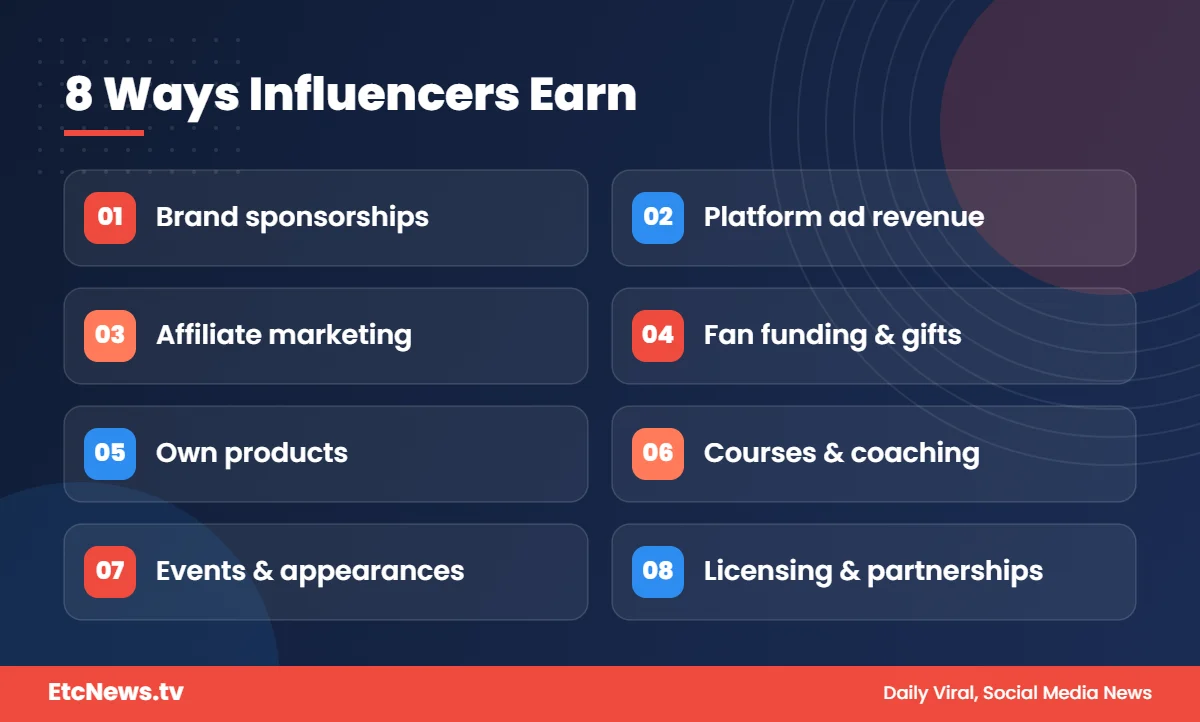
1. Brand Sponsorships and Collaborations
Brands pay creators to feature products in videos or posts. Rates depend on audience size, engagement, niche, and the scope of work (a single post versus a long-term campaign). This is the primary income source for many lifestyle, beauty, fashion and food creators.
2. Platform Ad Revenue
On platforms such as YouTube, approved creators earn a share of ad revenue. Eligibility rules apply. For YouTube, check our guide to YouTube monetization requirements 2026.
3. Affiliate Marketing
Creators share special links to products, and earn a commission when followers purchase through them. It works best when recommendations are honest and relevant to the audience.
4. Fan Funding: Memberships, Super Chats and Gifts
Many platforms let viewers support creators directly through memberships, tips, live-stream gifts and similar features. Loyal communities can make this a stable income.
5. Selling Their Own Products
Merchandise, clothing lines, beauty products, courses, e-books and presets let creators keep more of the revenue, though they also take on business costs and risk.
6. Paid Courses, Workshops and Coaching
Creators with expertise (fitness, cooking, photography, business, languages) can package their knowledge into paid programs.
7. Appearances and Events
As their profile grows, some creators earn from hosting events, public appearances, or speaking engagements.
8. Licensing and Content Partnerships
Creators may license their videos or photos, or join media partnerships and ambassador programs that pay for ongoing content.
What Affects an Influencer’s Income?
| Factor | Why it matters |
|---|---|
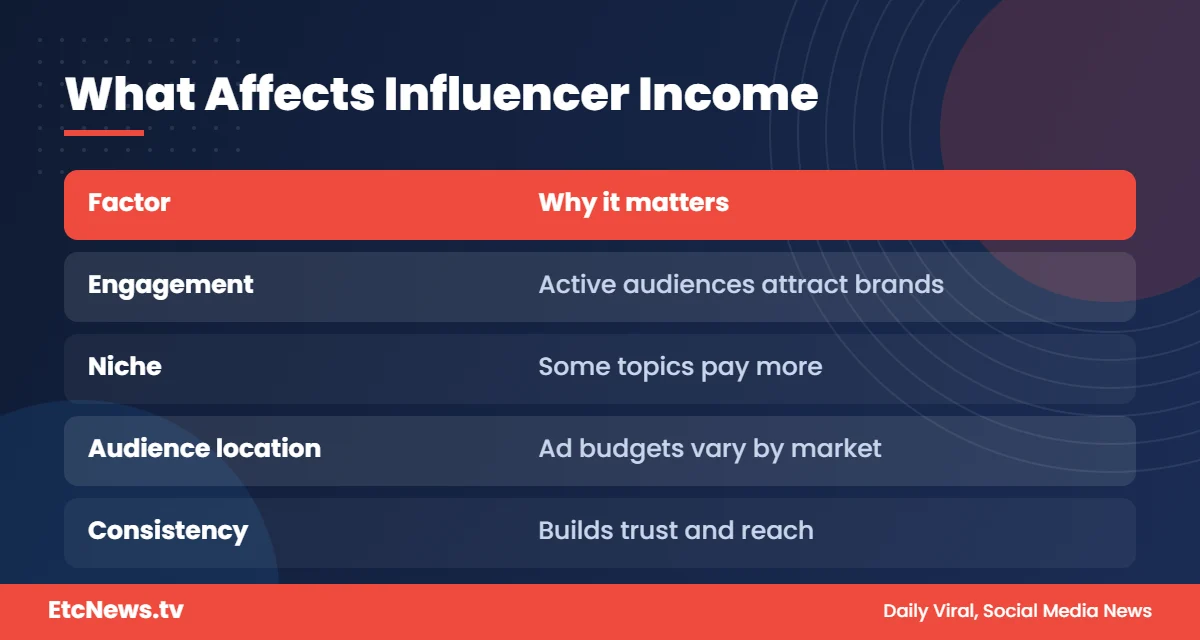
| Engagement rate | Brands prefer active, responsive audiences over big but silent ones. |
| Niche | Some topics, such as tech and finance, attract higher-paying advertisers. |
| Audience location | Advertisers often pay more for audiences in certain regions. |
| Consistency | Regular posting builds trust and a predictable audience. |
| Reputation | Trust and honest disclosures lead to repeat brand work. |
The Truth About Earnings Claims
Be cautious when you see screenshots or headlines claiming exact earnings for individual creators. Income is private, fluctuates month to month, and is often exaggerated for attention. Unless the creator has shared figures themselves, treat such numbers as unverified.
Honesty Matters: Disclosures
Responsible creators clearly mark sponsored content, using platform tools or labels such as “ad” or “sponsored”. It builds trust and protects them from complaints. To learn how some Pakistani creators built their audiences, browse our Influencers section.
Income Streams by Creator Size
| Stage | Typical opportunities |
|---|---|
| Beginner (building audience) | Affiliate links, product gifting, small local collaborations |
| Growing creator | Paid sponsorships, platform monetization, fan funding |
| Established creator | Long-term ambassador deals, own products, events, licensing |
This is a general pattern, not a rule. Some small creators in specialist niches earn well from brand work, while some large accounts earn little because their audience is not engaged.
The Hidden Costs of Being a Creator
Headlines focus on income, but creators also have expenses. Common ones include cameras, microphones and lighting; editing software and subscriptions; internet and mobile data; travel for shoots; and paying editors, designers or managers as they grow. Agencies or managers usually take a percentage of brand deals. Creators also need to think about taxes on their earnings, which vary by country, and are wise to get advice from a qualified professional.
How to Start Earning as a New Creator
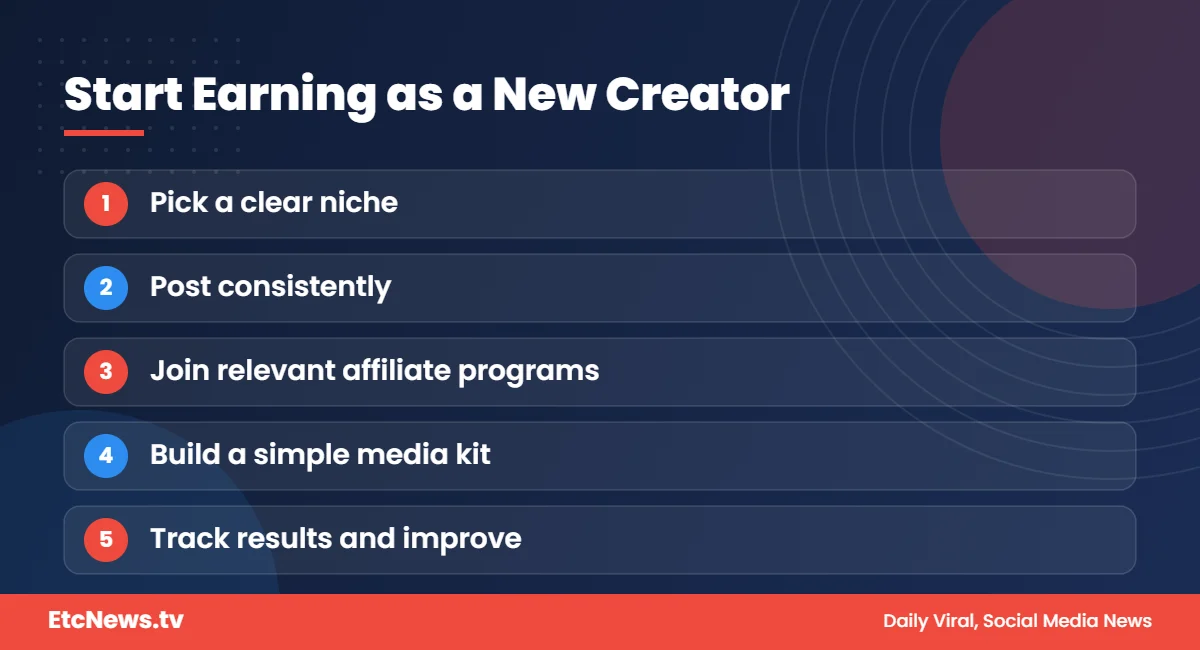
- Pick a niche where you can provide clear value.
- Post consistently to build trust and give algorithms data to work with.
- Join affiliate programs for products you already use and genuinely recommend.
- Create a simple media kit to present yourself to brands.
- Track what works and do more of the content your audience values.
Our guide to how brands choose creators explains what companies look for before they offer a deal.
Myths About Influencer Income
- Myth: Every influencer is rich. In reality, many creators earn modest or irregular income, and many do it part-time alongside studies or jobs.
- Myth: More followers always means more money. Engagement, niche and trust often matter more to brands than size alone.
- Myth: Platforms pay everyone automatically. Most programs have eligibility rules, and some are only available in certain countries.
- Myth: It’s easy money. Planning, filming, editing, replying to comments and negotiating deals take significant time and effort.
Building Income That Lasts
Trends come and go, and algorithms change without warning. Creators who last usually build an asset they control, such as an email list, a website or their own products, alongside their social accounts. They also keep their audience’s trust by recommending only products they believe in. Over time, that trust becomes the most valuable thing a creator owns.
It also helps to keep simple records: what each brand paid, when payment arrived, and how each campaign performed. These records make it easier to set fair rates, plan for slow months, and present results confidently when pitching new partners.
How Do Influencers Make Money in Pakistan?
The same income streams apply in Pakistan, with a few local differences. Brand partnerships with local fashion, food, telecom and beauty brands are a major source for many creators. YouTube monetization is available to Pakistani creators who meet the Partner Program requirements.
Some platform reward programs are not available in every country, so many Pakistani creators rely more on sponsorships, affiliate marketing and live features. You can read more in our comparison of TikTok vs YouTube Shorts vs Reels.
Seasonal moments such as Ramadan, Eid and wedding season often bring more brand campaigns. Creators who plan content in advance for these periods are usually better placed to win deals. Asking “how do influencers make money in my market?” helps new creators set realistic goals instead of copying strategies built for other countries.
Questions to Ask Before Trusting a Creator’s Recommendation
As a viewer, it helps to understand how creators are paid, because it explains why certain products appear in your feed. Ask yourself: Is the post labelled as sponsored? Does the creator explain both pros and cons?
Have they used the product over time, or is this a one-off mention? Honest creators are usually happy to answer these questions, and the best ones only promote products that genuinely suit their audience.
Frequently Asked Questions
How many followers do you need to make money?
There is no universal number. Some programs have thresholds, while brand deals depend on engagement and audience fit, so smaller creators can also earn.
What is the most common income source?
For many creators it is brand partnerships, often combined with platform ad revenue or affiliate links.
Do all influencers get paid by the platform?
No. Eligibility depends on the platform, the program and the creator’s country.
Is influencer income stable?
Often not. Diversifying across several sources reduces risk.
Do influencers have to pay tax?
Tax rules depend on the country and the type of income. Creators should consult a qualified tax professional.
Conclusion
Influencer income comes from many sources and rewards trust, consistency and a clear niche. If you are building your own channel, start by understanding the rules, then diversify as you grow.